
Table of Contents
Abstract Algebra: 1st Week
The first week of abstract algebra is mostly about learning to replace calculation with structure. Instead of asking only how to compute with numbers, matrices, functions, or symmetries, we ask what rules those objects satisfy and what conclusions follow from those rules alone.
A useful starting point is the idea of a binary operation. If S is a set, a binary operation on S is a rule that takes two elements of S and returns another element of S. Addition on the integers is a binary operation because, for any integers a and b, the result a + b is again an integer. Division is not a binary operation on the integers, because 1 / 2 is not an integer.
Groups
A group is a set G together with a binary operation, usually written multiplicatively, satisfying four conditions:
- Closure: if
a, b \in G, thenab \in G. - Associativity: if
a, b, c \in G, then(ab)c = a(bc). - Identity: there is an element
e \in Gsuch thatea = ae = afor everya \in G. - Inverse: for every
a \in G, there is an elementa^{-1} \in Gsuch thataa^{-1} = a^{-1}a = e.
If the operation also satisfies ab = ba for all a, b \in G, then the group is called abelian.
Standard examples include:
(\mathbb{Z}, +), the integers under addition.(\mathbb{R} \setminus \{0\}, \times), the nonzero real numbers under multiplication.GL_n(\mathbb{R}), the invertiblen \times nreal matrices under matrix multiplication.- The symmetries of a polygon under composition.
The matrix example is important because it reminds us that a group operation does not need to be commutative. In general, if A and B are matrices, AB and BA may be different.
Basic Checks
When checking whether a proposed structure is a group, it helps to test the axioms in order:
- Identify the set.
- Identify the operation.
- Check closure carefully.
- Check associativity, usually by using a known associative operation.
- Find the identity element.
- Find the inverse of a general element.
- Only after that, decide whether the group is abelian.
For example, the positive real numbers under multiplication form an abelian group. Closure holds because the product of two positive real numbers is positive. The identity is 1, and the inverse of a > 0 is 1/a, which is also positive.
By contrast, the positive integers under addition do not form a group. Closure and associativity hold, but there is no additive identity inside the positive integers if 0 is excluded, and additive inverses are also missing.
Subgroups
A subgroup is a subset of a group that is itself a group under the same operation. If H is a subset of G, then H is a subgroup when:
His nonempty,- for all
a, b \in H, the productab^{-1}is also inH.
This one-step subgroup test is often faster than checking all group axioms again.
Examples:
2\mathbb{Z}is a subgroup of(\mathbb{Z}, +).n\mathbb{Z}is a subgroup of(\mathbb{Z}, +)for every integern.- The set of rotations of a square is a subgroup of the full symmetry group of the square.
Homomorphisms
A homomorphism is a structure-preserving map between groups. If (G, *) and (H, \cdot) are groups, a function \varphi: G \to H is a homomorphism if
for all a, b \in G.
The point is that the map respects the operation. Homomorphisms allow us to compare groups by comparing their structures instead of just their elements.
Important related definitions:
- The kernel of
\varphiis the set of elements inGsent to the identity ofH. - The image of
\varphiis the set of elements inHthat are reached by\varphi. - An isomorphism is a bijective homomorphism. If two groups are isomorphic, they have the same group structure even if their elements look different.
LaTeX Notes
The original note also included several LaTeX rendering checks. They are kept here because they are useful for testing Markdown and WordPress equation support:
$latex E=mc^2$
\[E=mc^2\]
\(E=mc^2\)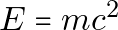
$$E=mc^2$$
Exercises for the First Week
- Prove that the identity element of a group is unique.
- Prove that the inverse of each element of a group is unique.
- Show that
(\mathbb{Z}, +)is a group. - Show that
(\mathbb{Z}, \times)is not a group. - Decide whether the nonzero rational numbers form a group under multiplication.
- List all subgroups of
(\mathbb{Z}, +)that you can describe in the formn\mathbb{Z}. - Give an example of a non-abelian group and explain why the operation is not commutative.
The main habit for this week is to always separate the set from the operation. Most mistakes in early abstract algebra come from checking facts about the wrong operation or assuming an inverse exists before proving it belongs to the set.