Late one night in a university lab, a graduate student watches code churn through data. A result flashes on screen: a promising graph, a key statistic, evidence of a breakthrough. Excitement builds, but then reality sets in: now comes the hard part: writing the paper. She opens a blank document, trying to summon the energy to narrate months of experiments in polished academic prose.
What if the manuscript could almost write itself as the experiments unfolded?
What if running an experiment also meant drafting its results section in real time?
This is the vision behind PaperAgent, an AI-powered workspace that fuses the lab notebook and the writing desk into one continuous research flow.
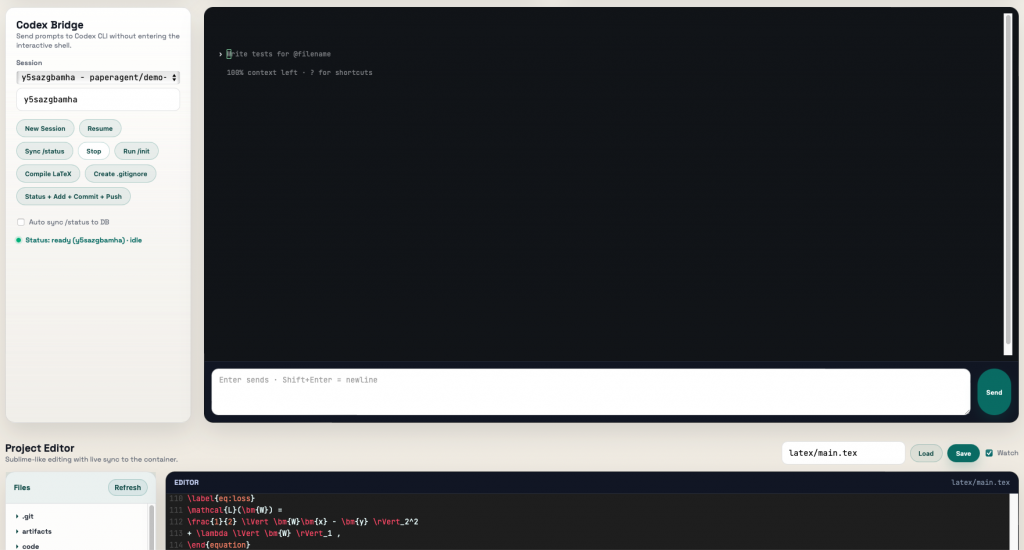
Table of Contents
Bridging the Gap Between Lab and Literature
In traditional research workflows, experimentation and paper writing live in separate worlds. Researchers spend days or weeks running experiments, generating plots and data, only to switch contexts entirely when it is time to write the manuscript. This gap leads to duplicated effort, copy-pasting results into Word or LaTeX, version confusion, and those infamous last-minute paper-writing marathons.
PaperAgent was born from experiencing this pain firsthand. Its creator, Lachlan Chen, a PhD researcher and founder of LazyingArt, has a simple mission: build tools so people can do less busywork and focus on what truly matters. That philosophy, the belief that creativity and research should feel lighter, not heavier, runs through everything at lazying.art.
Inspired by this idea of reducing needless labor, PaperAgent’s core concept is straightforward but radical:
Combine experiments and writing into a single, seamless process.
Instead of treating a paper as something written after the research, PaperAgent treats it as a living document that evolves together with your experiments.
As part of the LazyingArt ecosystem, which also includes projects like OnlyIdeas, a research-to-product space for bold concepts, PaperAgent deliberately blurs the line between doing research and writing about research. The goal is simple: never have to say “I’ll write it up later,” because the writing happens naturally, alongside the work itself.
A Day in the Lab with an AI Writing Partner
Imagine starting your day inside PaperAgent.
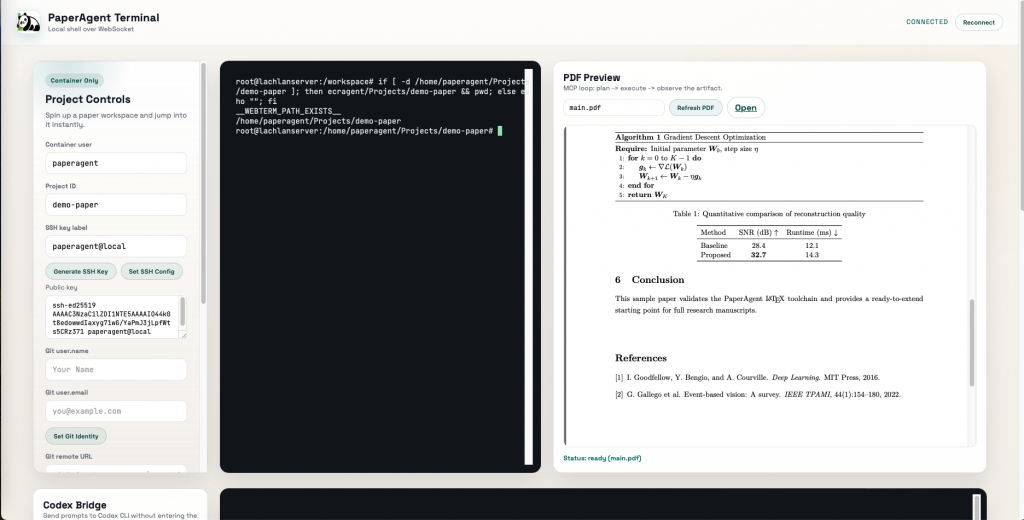
You open the workspace, and it feels like a hybrid between a Jupyter notebook and a manuscript editor. Your project already has a structure: Introduction, Methodology, Results, waiting to be filled. As you run experiment blocks, including code, simulations, measurements, or notes from the bench, PaperAgent captures both the outputs and the surrounding context.
Generate a plot, and a placeholder caption appears below it. Run an analysis, and a few sentences of preliminary interpretation are suggested automatically. The AI does not replace your thinking; it reflects it back to you in writing.
As you tweak parameters and rerun experiments, the Results section updates in real time. The system might suggest something like:
“The above figure shows a significant spike, indicating a strong positive correlation. Would you like to add a sentence discussing possible mechanisms?”
By the time the experiment ends, the manuscript is no longer an empty shell. It is a living draft, where every figure and paragraph is directly tied to the data that produced it.
How PaperAgent Works Its Magic
Under the hood, PaperAgent brings together several ideas that researchers have wanted for years:
- Unified Notebook-Manuscript Interface: Experiments and writing live in the same environment. The place where you execute code or log observations is also where your paper takes shape. No more context switching.
- AI-Powered Drafting: PaperAgent uses modern language models as scientific writing assistants. As results appear, the AI can draft method descriptions or explain findings in seconds. You always stay in control; the AI provides a starting point, not a final verdict.
- Live Linking of Data and Text: Figures, tables, and claims stay connected to their source experiments. Update the data, and the manuscript updates with it. The paper becomes a dynamic reflection of the current state of your research, not a frozen snapshot.
- Reproducibility by Design: Because the paper contains the steps that generated each result, reviewers and collaborators can trace the analysis directly. The document does not just describe the work; it can be the work.
- Experiment Planner Meets Storyteller: PaperAgent helps structure projects from the start. Begin with a hypothesis or outline, and the system can suggest sections, missing analyses, or experiments needed to complete the narrative, like a quiet mentor guiding both the science and the story.
Why Researchers and Graduate Students Care
For many scientists, writing is necessary but exhausting. It often arrives at the end of a project, under pressure, when energy is already depleted. PaperAgent flips that pattern by encouraging a write-as-you-go approach.
The benefits are immediate:
- Clearer Thinking: Writing alongside experimentation forces ideas into words early. Gaps in logic appear sooner, when they can still guide better experiments.
- Massive Time Savings: By the time experiments finish, much of the manuscript already exists. Weeks of late-night formatting and rewriting disappear.
- Learning Through Feedback: Especially for graduate students, AI-generated drafts act like a writing tutor, demonstrating how results and methods are typically described while still leaving room for your own voice.
- Better Collaboration: Advisors and collaborators can review a live draft at any time, commenting while experiments are still ongoing. Research and feedback move in parallel.
The Future of Research Writing Is Already Here
A decade ago, the idea of an “agent” that helps write papers would have sounded like science fiction. Today, it is possible, not because researchers are lazy, but because their time is precious.
PaperAgent reflects a belief shared across LazyingArt projects: the best technology is invisible. You focus on science. The rest quietly works in the background.
Early users describe PaperAgent as an ever-present lab partner, one that crunches data, drafts text, and never complains. Of course, the responsibility for correctness, insight, and creativity remains human. PaperAgent does not replace researchers; it gives them back time.
Join the Movement
PaperAgent is more than a tool. It is part of a broader shift in how research is done, one where thinking, experimenting, and writing are no longer separate phases.
You can explore the project here:
- Project site: https://paper.lazying.art
- Open-source repository: https://github.com/lachlanchen/PaperAgent
If the idea of experiments that naturally turn into manuscripts resonates with you, follow the project, explore the code, or simply keep an eye on what is coming next. Sometimes the most important tools do not shout for attention; they quietly change how work feels.
PaperAgent invites you to spend less time fighting documents and more time discovering something new.